
What is Keto?
The Ketogenic Diet, or “Keto” for short, is a high fat, moderate protein, low carbohydrate diet. You may also see it abbreviated as HFLC (High Fat Low Carb). The diet gets its name from a natural metabolic process called Ketosis. When the body doesn’t have enough glucose to use for energy (which it gets primarily from carbohydrates), it breaks down stored fats in a process called ketosis. Fatty acids known as ketones are created and released during this process and are used as energy instead of glucose. The goal of the keto diet is to force the body into ketosis by reducing carbohydrates to very low levels.
It is important to note that the process of ketosis is natural. It happens every night when you sleep or other times when you don’t eat for long periods of time and your body does not have access to glucose for energy. The difference here is that you are not forcing ketosis by lack of calories but only by lack of carbohydrate.
Is Keto Safe?
Keto was originally used to treat Diabetes before the use of insulin. It has also been used to treat seizure patients. In more recent years, it has become more popular as a weight loss diet or even a long-term lifestyle. Many say that long-term ketosis is too hard on the liver. Others report that the increase in saturated fat intake raises LDL cholesterol. Others claim it hinders physical performance.
However, clinical studies seem to support the Ketogenic diet. This study showed substantial weight loss, increased HDL (good), and decreased LDL during a 24 week study of obese patients. Although there isn’t any clinically supported evidence available to say that the ketogenic diet is “safe”, there also doesn’t seem to be any evidence to suggest that it is dangerous for the average person.
Of course, before starting any diet or nutrition program, you should always consult your physician. Each person has unique physical reactions to different foods and diets.
NOTE: It is important to note that ketosis is different than ketoacidosis. The former is a natural state that happens as described above. The latter is a dangerous state that occurs when your body doesn’t produce enough insulin and the blood becomes too acidic due to an overload of ketones. It is very rare for ketoacidosis to occur from eating a keto diet alone. It typically occurs in people who have Type 1 diabetes that don’t produce insulin properly in their body.
Is Keto The Same As Paleo?
While paleo and keto diets overlap quite a bit, they are not the same thing. It’s pretty simple to be both Paleo and Keto at the same time but there are some key differences in the two diets. Here are the major differences:
♦ Paleo does not require or promote specific macronutrient (carb/fat/protein) ratios while keto does.
♦ Keto does not restrict full fat dairy while Paleo usually does (except sometimes ghee and/or butter).
♦ Although Paleo restricts many of the main carbohydrate sources (grains and legumes) like Keto, it usually doesn’t restrict other natural carb sources such as pure maple syrup, coconut sugar, sweet potatoes, squash, and other starchy vegetables. These sources would often take you out of ketosis.
♦The Paleo diet focuses more on gut health and removing foods that are difficult to digest whereas the Keto diet focuses more on forcing your body to burn fat.
Otherwise, the two diets are very similar. They both restrict grains and legumes completely, encourage healthy fat intake, encourage animal proteins, promote non-starchy vegetables, and restrict refined sugar.
How Does Keto Fit With 90/10?
At 90/10 Nutrition, we believe strongly that there is no specific “diet” that is best for everyone. However, we do believe that eating REAL food as close as possible to its natural state IS best for everyone.
While the keto diet focuses more on limiting a particular macronutrient intake (carbohydrate), we have found that most keto diet resources on the web also promote REAL food and fit quite nicely with 90/10. So, for those wishing to see how they feel using keto principles along with 90/10, it’s quite easy to modify the tiers to do keto while also meeting the foundational principles of 90/10 Nutrition.
To adapt the 90/10 tiers to keto (see the end of this guide), we have moved carb sources that are completely off limits on keto to the red tier, moved some carb sources to the yellow tier (less starchy carbs that you can have sparingly), and allowed for more fatty animal proteins on the green tier.
To be completely clear, these changes are only to adapt 90/10 to meet the guidelines of the keto diet for those wishing to experiment with it to see how their body reacts. These changes for this guide do not reflect a belief that items moved from our normal green tiers are no longer “healthy”.
What Are The Benefits Of Keto?
The most obvious and attractive reported benefit of the keto diet is weight loss. However, many have reported other benefits such as increased mental clarity, lower cholesterol, less acne, more energy, and controlled/normalized hunger.
Of course, as we mentioned before, everyone is different. So, you many not experience all of these benefits.
Keto Macronutrient Ratio
In order to maintain ketosis, the keto diet restricts carbohydrate to low levels. Some keto diets recommend carb intake in terms of total grams. Others use a percentage of total intake. Typically, you will see either “less than 50g of carbs” or “less than 10% from carbs”. We recommend using a percentage system since total intake can vary greatly based on activity level and other factors.
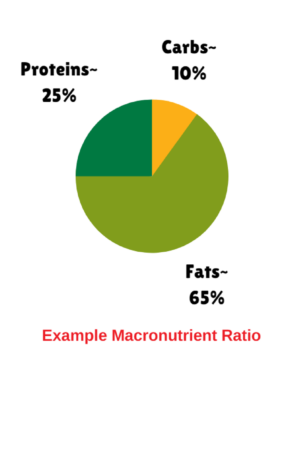
Recommended Macronutrient Ratio:
♦ 5-10% of calories from carbs
♦ 20-30% of calories from protein
♦ 60-75% of calories from fat
Tracking Your "Macros"
It is important that you track your macronutrient ratio to be sure that you are within the recommendations above. The easiest way we have found to do that is to use the MyFitnessPal app.
We put together a complete guide for using MyFitnessPal with 90/10, including details on how to get your macros on THIS BLOG.

90/10 Keto Step By Step
Step 1) Calculate your yellow tier calorie goal using our calculator HERE. Then multiply by 10 to get your overall calorie goal.
Step 2) Set up a MyFitnessPal account as described in our blog HERE. If the app gives you a different calorie number than you got in step 1 using our calculator, you can go into the settings and change it in the app or you can consult a coach in 90/10 community to help you decide which to use.
Step 3) Print out and get familiar with the special green, yellow, and red tiers at the end of this guide. They are organized and modified specifically for doing keto with 90/10.
Step 4) Track your food daily using the MyFitnessPal app aiming to eat more than 90% of your food from the green tier and less than 10% of your food from the yellow tier (as you would in regular 90/10) as well as staying within the macro ratios recommended in this guide (specifically keeping carbs at <10%).
Step 5) Don’t obsess over calories unless you are finding that you are way higher or way lower than the calculation from step 1 on a regular basis. Occasional days that are significantly higher or lower OR consistent days that are off by 100-200 calories are not a big deal.
Step 6) Follow all the other principles of 90/10 and healthy living. Drink plenty of water, read ingredients to compare to the tiers, stay away from processed food, be skeptical of packaged foods with marketing (especially “low carb” in this case), and eat a wide variety of foods from the green tier.
90/10 Keto Tiers
The next couple of pages have our modified tiers for keto. Here’ the overview:
Green Tier: Meats, lower carb veggies, healthy fats, full fat dairy, berries
Yellow Tier: higher carb veggies, most fruits, some alcohol
Red Tier: Junk food, fast food, processed food, sugar, grains, beer, legumes
Keto Green Tier
VEGETABLES
Artichokes
Asparagus
Bok Choy
Broccoli
Brussels Sprouts
Cabbage
Carrots
Cauliflower
Celery
Cucumbers
Eggplant
Greens, Leafy (all types)
Green Beans
Jicama
Lettuce
Mushrooms
Okra
Onions
Peas
Peppers (bell and sweet)
Radishes
Sprouts
Tomatoes
Zucchini
PROTEINS
Beef
Buffalo or Wild Game
Chicken, Turkey and other fowl
Dairy (Full Fat, except milk)
Eggs
Fish (preferrably wild caught)
Pork
Shellfish
Protein Powder (pure, unsweetened)
Veal
FATS
Avocado
Butter
Cheeses, Various
Coconut, unsweetened
Coconut Milk (unsweetened)
Coconut Oil
Flaxseed
Ghee
Nuts
Nut Butters
Olives
Olive Oil
Seeds
Seed Butters
FRUITS
All Berries
FREE FOODS
Lemon and Lime Juice
Vinegars
Mustard
Herbs (fresh and dry)
Spices
Garlic
Ginger
Hot Sauce (Mexican)
Flavor Extracts
Black Coffee, Unsweetened
Tea, Unsweetened
Broths (low sodium, no sugar)
Stevia
Water
Keto Yellow Tier
All fruits except berries
Almond Milk (unsweetened)
Beets
Canola and Vegetable Oils
Dairy (if not full fat)
Dry Wine and Hard Liquor
Purple Potatoes
Squash
Sweet Potatoes
Keto Red Tier
All Grains (wheat, corn, rice, etc)
All high carb sweeteners (honey, maple syrup, agave, etc)
All Legumes (beans, lentils, etc)
Artificial Sweeteners (sucralose, aspartame, saccharine, etc)
Beer
Fillers, Preservatives, chemicals you don’t recognize as food
Fried Foods (excludes lightly sauteeing in Green Tier oils)
High Fructose Corn Syrup
Hot Dogs and other highly processed meats (cured with chemicals and preservatives and sugar)
Hydrogenated Foods
Juice (sugar added)
Maltodextrin
Margarine
Potatoes
Soft Drinks, Diet
Soft Drinks, Regular
Sports Drinks and Sports Nutrition Products (unless using properly for training)
Sugar
Sugar Alcohols (anything ending in -tol)